CyberMACS Research Contributions: 23rd CIIT Conference (Struga 2026)
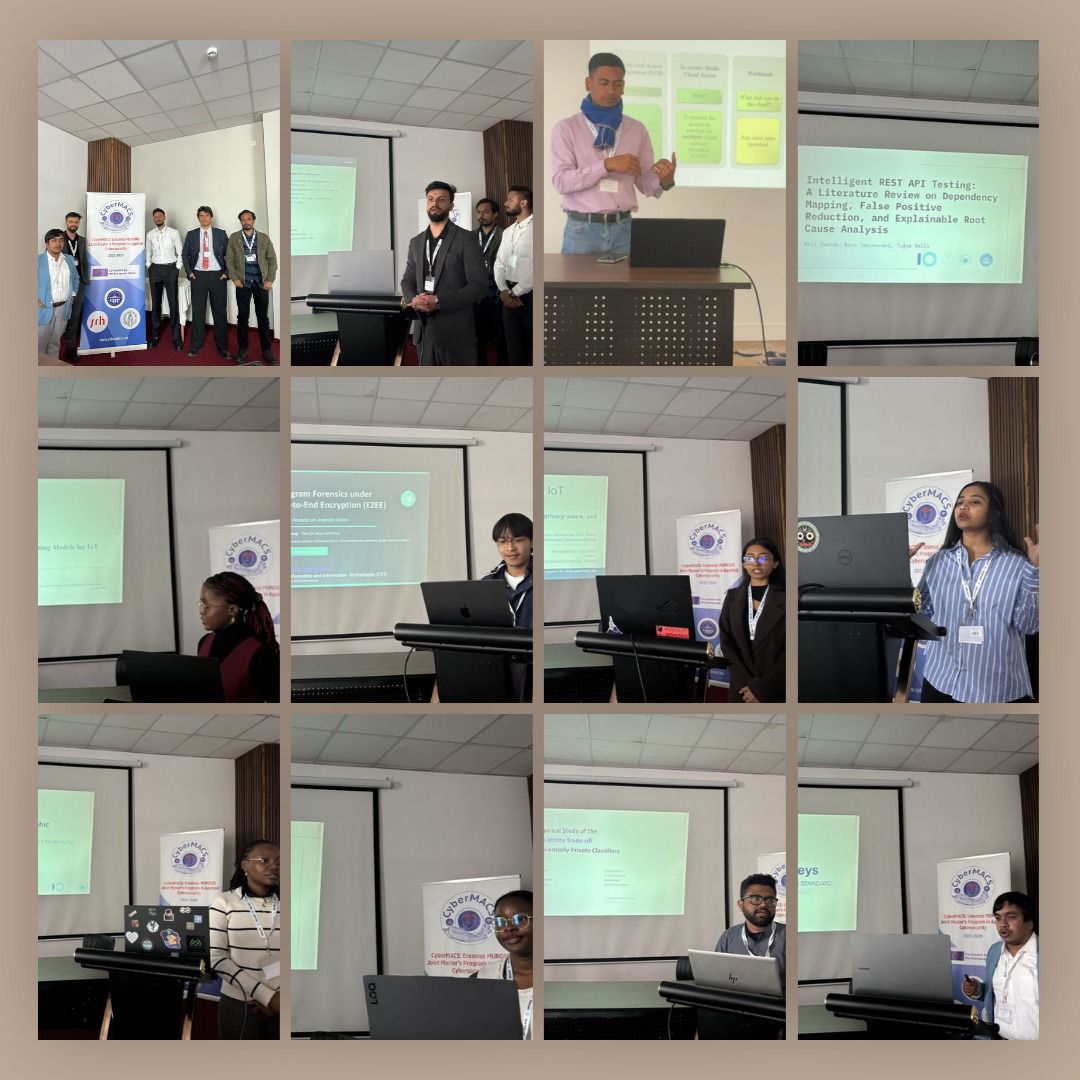
The CyberMACS Project marked a significant academic milestone at the 23rd CIIT Conference, held in the historic city of Struga, N. Macedonia, from April 24–26, 2026. 22 students from both Intake 2 and Intake 3 where most of them presented advanced research findings, highlighting the program’s commitment to excellence in Cybersecurity and Artificial Intelligence.
The conference featured three dedicated CYBERMACS workshop sessions, providing a platform for our students to lead discussions on emerging threats and innovative security frameworks.
Detailed Research Directory
| Research Paper Title | Student Lead / Presenter | Intake | Session / Workshop |
| dev//SDB: Software Defined Boot – A novel standard for diskless booting anywhere and everywhere | Aditya Mitra, Hamza Haroon, Amaan Rais Shah, Mohammad Elham Rasooli, Bogdán Itsám Dorantes-Nikolaev | Intake 3 | Session 18 |
| Verifiable Passkey: The Decentralized Authentication Standard | Aditya Mitra | Intake 3 | Session 18 |
| Identity and Access Management for Securing Multi-Cloud Access for Agentic AI Workloads | Purujit Srinivasan | Intake 2 | Session 14 |
| Securing the Agentic Backbone: A Literature Review of Security Challenges in the Model Context Protocol | Andres Marcelo Ortiz Jimenez | Intake 2 | Session 17 |
| A Prompt Injection Detection Model Addressing Over-Defense | Vaishnavi Santosh Sable | Intake 3 | Session 17 |
| Anomaly Detection in IoT Networks: A Focused Survey on Federated, Privacy-Aware, and Adaptive Learning Models | Sristi Mitra | Intake 2 | Session 17 |
| Comparative Study of Machine Learning Modelsfor IoT Network Anomaly Detection | Tionge Mughogho | Intake 2 | Session 17 |
| An Empirical Security Comparison of WebAssembly Runtimes and Docker Containers for Linux-based IoT Edge Devices | Sowat Kheang | Intake 2 | Session 14 |
| Telegram Forensics under End-to-End Encryption (E2EE): Artifact Analysis on Android Device | Sowat Kheang | Intake 2 | Session 18 |
| Safer Internet for Children: A Unified ROBERTa-based Framework for Multi-Label Harmful Content Detection | Gertrude Nabasirye | Intake 2 | Session 17 |
| Digital Forensics and Cryptographic Analysis: A Comparative Study of Password Hashing Resilience in Modern Linux Environments | Gertrude Nabasirye | Intake 2 | Session 17 |
| An Empirical Study of the Privacy-Utility Trade-off in Differentially Private Classifiers | S M Dedar Alam | Intake 3 | Session 18 |
| Intelligent REST API Testing: A Literature Review on Dependency Mapping, False Positive Reduction, and Explainable Root Cause Analysis | Meli Imelda | Intake 2 | Session 18 |
| Browser Artifact Analysis for MFA Login Forensics in Modern Web Environments | Diana Orozek kyzy | Intake 2 | Session 17 |
| STRIDE-AI: A Threat Modeling Framework for Generative AI Security Assessment | Tsafac Nkombong Regine Cyrille | Intake 2 | Session 14 |
| A Systematic Survey of Vulnerability Detection Techniques for JavaScript Web Applications | Simran Shilpakar | Intake 2 | Session 18 |
| Evaluating the Reliability of Policy-as-Code-Based Segregation of Duties Enforcement in Hybrid Cloud Environments | Lenear Mwondi | Intake 2 | Session 14 |
| Evaluating the Reliability of Machine-Learning-Based Detection of IPv6 Neighbor Discovery and Router Advertisement Attacks | Allan Onyango | Intake 2 | Session 14 |
Strategic Impact & Academic Recognition
The presentations highlighted a shift in research toward Generative AI, Agentic AI governance, and privacy-preserving IoT frameworks, ensuring that CyberMACS remains at the forefront of global cybersecurity discourse.
The conference concluded with the CyberMACS Workshop sessions, affirming the program’s vital role in training the next generation of cybersecurity experts.

